- Home
- Mini Kinds
Dollhouse Miniatures: A World of Minis
Limited Time Offer: Get great deals on Christian products for kids. Check your deals out today.
*Decorate your home with these amazing finds that only require your imagination.
Dollhouse Miniatures give Tiny Structures that Touch of Real
Mini Projects at your Fingertips. Shrinking your world into dollhouse minis would be a captivating project to say the least. Tiny items take a lot of patience but the prize is worth it.
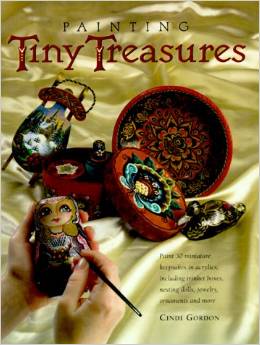
Ever wonder how anyone could have the patience and talent to paint on a pinhead? Those amazing microscopic paintings are mind boggling. Fortunately designing in miniature isn't so complicated. Nor as stressful.
Book Featured: #1. Painting Tiny Treasures Cindi Gordon 2000-08-02
Just for You Today - Explore a wide selection of designer fragrances and colognes at discounted prices
Look in the special product box below about any book featured on this page to inquire concerning that item. Due to books being placed on the out-of-print shelf rather quickly these days some items may not be currently available.
Materials List for Dollhouse Miniatures
Miniature Design Material include These Types
.. and of course we all know this list could go on and on. It is just the tip of the iceberg, sotospeak ..
Paper Crafts
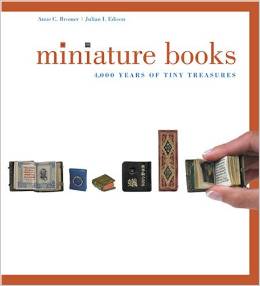
* Paper Crafts for your Doll House - This category includes items such as: books, magazines, art posters, photos, current and antique novels, greeting cards, newspapers, calendars, various items of furniture, crafts, toys, money, passports, holiday items, and the list we are sure could be close to infinite. It's only limit would be your imagination.
Book Featured: #2. Miniature Books: 4,000 Years of Tiny Treasures
Paper dollhouse miniatures are objects you assemble from paper, there are a wide variety of these available commercially and on the web.... Printables and paper minis are the property of the designer and may only be used for personal use unless you have the designer’s permission. From At-the-Doll-House.com (Dollhouse Paper Miniatures Info)
Open "Show More" window immediately below and Go directly to the Project Featured - "Shrink Your Favorite Magazine" Here.
MORE about Paper Miniatures
Show More Show LessThe Tiny Details...
We find dollhouse paper miniatures intriguing with their oh so tiny details.

What do you have around you at this very moment? Do any of those things inspire you to shrink them?
Not literally, like the movie "Honey I Shrunk the Kids" or something. But just to attempt to shrink them by scanning, photo, or making a model.
Now to us an actual three-dimensional model-type such as: computer, toaster or whatever, does entail an extreme bit of calculating. So this, because of time restraints, is somewhat out.
We can however see shrinking our checkbook, passport or some other document though. Without too much trouble where that kind of project is concerned.
We have long admired the site of Jim's Doll's House Pages full of Dollhouse Paper Miniatures (link below). We found them early on in our own quest to online life. Jim has the most amazing printable minis.
What fun to sit and create those tiny items for our doll's house.
The Turn Around...
These Pluses are on Your Side
....But, on second thought, considering the creation of paper material minis, and the thought of Jim's site.... and our earlier mentioned items of computers, etc., we realize that Jim has done all the work for us!
He already possesses those items in calculated measure for a wide array of doll house sizes. Awesome.
And because of that, we realize it would take us no time in creating whatever we wanted. Awesome again.
Just the thought of creating items in this size, just gets our creative juices flowing. We would love to start right now.
The beauty of owning a Doll's House site ourselves is: that we can do any project in miniature we set our minds to on any given day.
So hence the lead into our Dollhouse Paper Miniatures Project of the day....
Project: The Doll's House Magazine, December 09 Edition
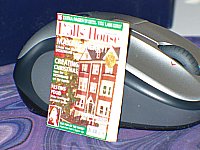
Making a replica of none other than The Doll's House Magazine, December 09 Edition, in our most favorite scale. Barbie Scale. Play Scale.
Your Supplies
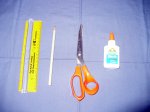
Supplies You will need for this Dollhouse Paper Miniatures Project:
- Ruler
- Pencil
- White glue
- Scissors
- Stationery clips
- Stationery Trimmer
- Computer scanner
- 1 Sheet of semi-gloss (semi-gloss is flexible)
- 1 Piece of regular letter size 8.5" x 11" (inches)
- Web page program or editor of your choice (we used FrontPage 2003)
- Photo editor program (we used PhotoStudio 2000)
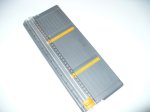
Your Project Steps


- The first step is to scan each side of your magazine. Front and Back.
-
Next use our scale calculator
found here to estimate the size of your finished dollhouse paper miniatures project.
Special Note about scale: 100 pixels= 1 inch. We found this useful.
As well check
this page from Jim's site about scale.
-
Next shrink both of your scans to approximately 200 pixels in height. We left the
check-mark beside "keep aspect ratio" and let our program figure out the width. Make sure
you crop and fine tune your minis in a photo editor. PLUS make sure each picture is exactly
the same in size. Even if you have to uncheck "keep aspect ratio" for one, it will not make
any difference. But for the very first photo do use "keep aspect ratio". Let that one set
the pace.
-
Save each picture in mini on your flash drive. (Because of computers going down we no
longer save anything to our computer.)
-
Now enter your pictures into your FrontPage program, or the like, side by side. No
spaces.
-
View it as if on a web page and print. Print 2 out. One on semi-gloss. One on plain
letter size. The one on plain letter size is a pattern for cutting out a couple (2) pages for your
magazine. The one on semi-gloss will become the cover of your mag.
-
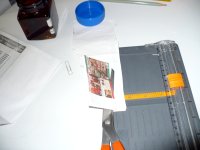
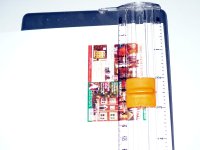
Cut out your tiny magazine.
-
Using your plain letter copy, cut out more pages. We made 4. 2 pages, each folded, making
your total of 4.
- Next we folded our cover and glued the blank pages in place.
The Finished Product
Now that you see how a magazine is made, you have the information needed to do additional projects of similar nature. Hope to see what you've all made in the future.


Return to Beginning Paper Dollhouse Miniatures Crafts
Polymer Clay
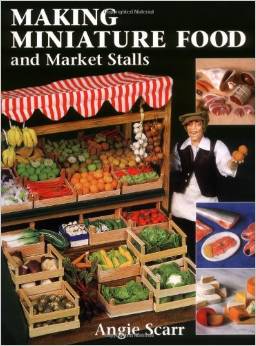
* Polymer Clay - Used for many miniature objects such as: Dolls, food, small appliances like clocks, kettles etc., brickwork, cookware, stoves, tiles, baskets, and candle-holders, to name only a few.
Book Featured: #3. Making Miniature Food and Market Stalls
"Polymer Clay is an oven baked modeling compound, widely used to sculpt tiny dolls house objects and food, scale dolls and figures, and scale models." - From About.com
MORE about Polymer Clay Miniatures
Show More Show LessTeach Yourself Doll Creation and Save
We enjoy Books on Dolls, Dollhouses, Minis..
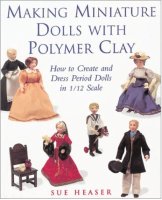
Yes we do enjoy books on Dolls, Dollhouses, Minis, Clothing and everything in between.
They provide so much information that otherwise without these books we would not have near the added knowledge that we want to have about each individual topic.
We also simply love books in general anyway. So it should not be a surprise that we are an Amazon affiliate.
From time to time on this site we will include a review of a special text of interest to everyone who views our pages.
And today that is exactly what we intend to do.
Today's review is of a book by Sue Heaser a qualified Art Polymer Clay Miniatures Senior Instructor, titled, "Making Miniature Dolls with Clay: How to Create and Dress Period Dolls in 1/12 Scale"
Follow us as we Review:

- the contents of her creatively intriguing text from "Sculpting Materials
to "Sculpting the Dolls" to "Making Wigs" to everything in
between. Making your own Polymer Clay Dollhouse Miniatures can be easier than you think,
-
then study a specific project from her fascinating book, titled - "Sculpting a
Woman Doll",
- and conclude with us as we all participate in the creation of our own doll's house people of our choice. Taking the lessons from her text and trying our hand at a tiny person we'll name at the end. (lol, depending on what this doll looks like, since it's our first time for miniature creation like this.)
Our Review Starts Here. Part 1 of 3.
This is a Great Book on Polymer Clay Miniatures.
"Making Miniature Figures with Clay"
Introducing a most Charming Masterpiece
Sculpting a Tiny Person
Just What does Sculpting a Dollhouse Miniatures Tiny Person Involve?
It would seem that sculpting a doll involves, first off, getting your creative juices fired up to start with. And Sue Heaser does that even in her introduction.
Sue Heaser's book, "Making Miniature Figures with Clay" is a clean, easy to read instructional manual with a down-to-earth appeal.
Which is what we as crafters prefer. And we "dollhouse" artists and collectors are crafters.
We don't know about you but when we look for a new dollhouse text, we look for a certain type. That said, even the font style plays a role in the book we often choose. Yes it definitely has to be appealing to the eye, as this volume is.
Really when you think of it. How often have you handled a book with an odd looking display and put it back on the shelf?
But too, this is where individual preference comes into play. Each person as they say, is different.
And the Contents are..
Sue's introduction makes us want to start the work. NOW! She makes it sound as if we CAN do this. Let's hope she's right. Part of our review will include us actually trying what she talks about.
The copyright year is 1999. An older volume now but definitely worth a look if you wish to purchase it and begin your education in tiny people creation.
"Making Miniature Figures with Clay" contains information on: Sculpting and Sewing Materials and Equipment; Sculpting Techniques; Sculpting the Dolls; Assembling; Painting; Dressing them in: Tudor, Regency, Victorian and Edwardian Costume; Making Wigs, plus references for suppliers and further reading.
Another good thing it has is an index. Yes so you can find that dollhouse miniatures subject you are remembering is in this text, again. We love a good index.
The Materials and Equipment:
This subject is covered very well. From the smoothing ability, translucency, strength, and quantities of the modeling compound.
Then the particular Brands are discussed. Brands listed Include:
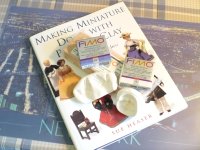
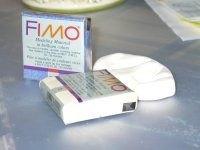
- Fimo,
- Formello,
- Polyform Products,
- Creall-therm,
- Du-kit,
- Cernit,
- and Modelene.
They are examined briefly under each brand of modeling compound listed.
She also recommends that we not mix different brands because it may effect long-term durability of our polymer clay miniatures. And we can not have that!
We mean, if you have painstakingly worked on your tiny person you will want it to last. It may make a valuable heirloom to pass on to that adorable grandchild of yours some day.
So don't mix the clays even if you are tempted. By all means, though, mix within the brand names to make dollhouse miniatures just do not cross mix. For example, DO MIX Fimo products with Fimo products. But DO NOT MIX Fimo products with Sculpey products.
In the Sewing Sections:
....which encompass the various costumes such as Tudor, Regency, Victorian and Edwardian she is again detailed in her layout. Explaining the fabric choices, trimmings, and everything else needed for each of her Polymer Clay Miniature designs.
What we found interesting in these sections was the creation of ones own buttons with this modeling compound. So that basicly does away with any excuse we may have had of not being able to find a tiny enough button to put on a tiny outfit.
As well where a person tells you how to create such things as buttons, can you see the possibilities of taking the knowledge we gain here and expanding it to, say, a Barbie costume. Want a very unique look? Try that. Design your own buttons!
For sure no one else has them on their miniature figures.
Also worth noting is that any costume featured has a very well done pattern to use.
We recommend that you copy any patterns you wish to use onto another source so you don't ruin your volume, using tracing paper or just simply photocopying it onto regular paper. We value all our craft books, as we are sure you do, so that will preserve your copy of this excellent manual.
**And whatever you do, do not sell the material from this volume. All of it belongs to the writer, as it should. ALWAYS and ONLY use your copies for your own personal polymer clay miniatures use.
However it is okay to gain inspiration and develop your own design from the knowledge you gain within a book like this.**
The Sculpting of the Figures:
....is another area of excellence. From the techniques to the actual sculpting to assembling to painting to wig making, she once again encourages us just by reading to get started, NOW.
We credit this creative desire though, not only to this volume but to the season we are currently in. In the spring we always feel like creating dollhouse miniatures. Imagine that lol!
But we will cover more details about Sue's book in Part 2 of our review. Sculpting an Amazing Doll !!
* * Wish to obtain her COMPLETE BOOK and follow us in this awesome review/project? You may purchase this polymer clay miniatures book online HERE.
* * and so ends Part 1 of this review on Polymer Clay Miniatures check by soon for Part 2....
Return to Beginning Polymer Clay
Pewter
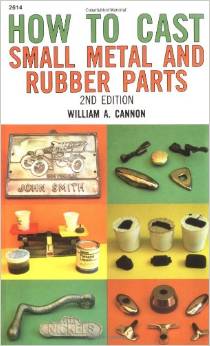
* Pewter - Any art form seems to be the order with these. Say you were wanting to place small items in your Doll House to create an artsy look.
Book Featured: #4. How to Cast Small Metal and Rubber Parts
"For instance with small ornaments, wall decorations, or different accent pieces. These would do. Plus for a castle creation, there are medieval items to consider such as Knights, swords, warriors, and various period display items."
MORE about Pewter Miniatures
Show More Show LessHammered Art for Your Doll House
The Definition of Pewter
Pewter Miniatures. What is it, and, Where did it come from?
"Pewter metal is a malleable metal alloy, traditionally between 85 and 99 percent tin, with the remainder consisting of copper, antimony, bismuth and lead. Copper and antimony act as hardeners while lead is common in the lower grades of this metal, which have a bluish tint.
It has a low melting point, around 170–230 °C, depending on the exact mixture of metals.
The word pewter is probably a variation of the word spelter, a common name for zinc.
This metal was first used around the beginning of the Bronze Age in the Near East. The earliest piece of this metal found is from an Egyptian tomb from 1450 BC." Partial quote taken from Pewter Dollhouse Miniatures - Wikipedia.org
Today's Fascinating Pewter Minis
Where these type of objects are concerned an old technique called hammering may be used in the construction.
Also a process such as casting can also be used which consists of molten metal being poured into a mold and allowed to cool.
After these processes various decorative techniques are implemented to finish the works of art.
Gold and silver have been worked since ancient times. So our modern day pewter miniatures are not new on the scene. They have in fact been around for a number of years.
War Games you Say
Today this particular type of miniature seems to have a lot to do with war games online. It is a metal used in the creation of miniature figures of soldiers and are collectible. However, as well, pewter does seems to be enjoying a rebirth in popularity.
It has a way of reflecting our heritage ever so well. Yet it is diversified enough to be at home with today's style of living.
Pewter is both practical and decorative and is found in some of the world's finest homes and museums.
Molded Metal Objects
Toy soldiers can be anything from green plastic army men to old-school G.I. Joes to hand-painted metal minis.
Some would be ideal for a castle dollhouse miniatures type scene.
If designing or painting your own pewter miniatures always use the best materials on the market. You will get the best results and have the fewest causes to complain.
If you start with the best instead of the lesser then you will generally come out a winner. Time to Work some into your Mini World.
Clay Sculptures
* Clay Sculptures - Mainly used for constructing figures. Some of the sculpting compounds used include Sculpey and Super Sculpey, Fimo, Magic Sculpt, Milliput - Silver Grey, Milliput - Terracotta and last but not least Green Putty. Sculpting has its rewards, especially if you are wanting to design your own original period figures.
Book Featured: #5. Creating Lifelike Figures in Polymer Clay: Tools and Techniques for Sculpting Realistic Figures
"Sculpting is probably the finest art in the Games Workshop hobby. Unlike painting, you start with nothing in your hands but two strips of blue and yellow stuff, and if you have patience you will watch your minis grow steadily, from the very beginning of knitting the Green Stuff together and to the final touches."
Featured Design Program of Our Choice
Chief Architect Home Designer Architectural - Link
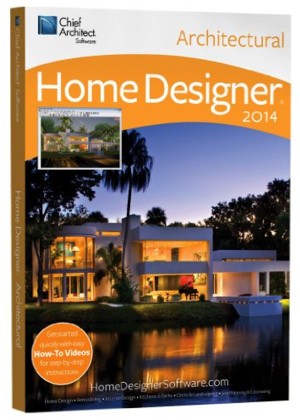
Never be at a loss again for how to design certain aspect of your dollhouse. For the outside as well as in the inside. Use all the information available at your fingertips to help you become the best you can be at design. Have the most fun designing your own miniature structures.
MORE about Modeling Clay Miniatures
Show More Show LessTake Your Passion to the Next Level
About Modeling Clay Miniatures
Modeling Clay Miniatures - "Sculpting is probably the finest art in the Games Workshop hobby. Unlike painting, you start with nothing in your hands but two strips of blue and yellow stuff, and if you have patience you will watch your miniatures grow steadily, from the very beginning of knitting the Green Stuff together and to the final touches." - Read more info about Sculpting your own Dollhouse Miniatures.
Working with Polymer
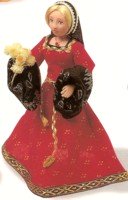
Working with polymer material and many other varieties is easy and safe for children and adults. Polymer is very versatile in that it lends itself to be stamped, sculpted, embedded, painted, sanded and even drilled. So in other words it can be used in just about any crafting project.
Different substances can be mixed with these compounds as well to create a more desirable effect. The substances you can use to mix with these compounds can include, but are not limited to the following:
- Colored sand,
- Rubber stamp embossing powders,
- Dried spices,
- even Potting soil....
Mixing these kinds of material into your clays are especially useful in creating faux stones. Imagine your dollhouse miniatures exterior with some of these stones cleverly worked into your outside landscaping.
In working with clays, they are generally considered non-toxic. However some precautions are still necessary in handling them.
These Precautions Include
- Polymer is not edible so do not make items you would serve food in.
- Any kitchen tools used in construction of these dollhouse miniatures should not return to the kitchen for further use by you in preparing meals.
- Never use a polymer constructed item for an ashtray or incense burner.
- Bake polymer in a well ventilated room.
- Don't eat while making your craft projects to avoid accidental ingestion of the modeling material.
- Wash hands well after handling polymer.
My own Experience
Speaking though of how versatile this modeling material really is, I have to mention, my own experience. I have done some modeling projects but in recent years like some people, I temporarily stopped.
That said, I had always thought that my modeling compounds, which lay quite unused, would be garbage by now. My only conclusion for it was that one day I would literally open a garbage bag and finally say goodbye to all my modeling clay miniatures supplies.
But the versatility is amazing! After years of laying dormant and unused I decided one day to get it out and check to see if there was any hope at all. To my surprise it was still in the pliable state it had been in, back when I had done projects with it.
Like I said amazing! So don't just chuck it away. There may be hope for your supplies as well. Crafting supplies after all are very versatile!
Stock up Today
Return to Beginning Clay Sculptures
Woodcrafts
* Woodcraft - In this category we find anything from balls, blocks, books, boxes, buckets, rolling pins, wheels, school bells, to food items, etc.
Watch the video, below, on creating a wooden miniature:
MORE about Woodcraft Minis
Show More Show LessWoodcraft Miniatures
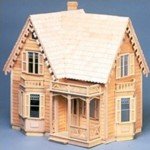
Woodcraft Miniatures - Heat up Your Woodcraft Miniatures Talent with these Creative Ideas!
In this category we find anything from balls, blocks, books, boxes, buckets, rolling pins, wheels, school bells, to food items, etc.
Breathe Life into Wood Projects
If you want to breathe life into wood projects the use of these various techniques are our suggestion:
- Wood burning
- Painting
- Stencilling
- Embellishing
- Staining
- Antiquing
- Varnishing
With these techniques you can literally take your Plain Jane Craft Projects and turn them into stunning works of arts. Depending of course on how much effort you are willing to make.
Applying Techniques for Larger Wood
Generally speaking too, you can apply any technique for larger wood pieces to your minis.
Like for instance, you'll be amazed at how easily a simple wood burning tool creates rich, intricate designs you can color with water-based paints, wax pencils, or gels.
Think of what the technique of wood burning will do for your imaginative woodcraft miniatures you design for your dollhouse.
Getting creative is easy when you first get excited about the projects you plan and then begin.
If you don't begin most times you lose the momentum of your first initial excitement. It all begins with willing steps forward. Or all is lost.
Gold Leaf and Crackle Glaze
Gold leafing and crackle glazing designs with paint can both be done using special products sold in kits. All these creative ideas can be applied to any miniature within minutes.
Working in mini takes no time at all.
In fact most of your time will be spent in planning your next project. A few flicks of your brush on wood and you're done.
This fact can not be overstated. It takes no time to paint a miniature and complete your project.
After you get started in minis and find all the time savings you will indeed not want to return to full-sided items.
Be sure to check out these awesome woodcraft miniatures available here.
Getting Inspired is a Snap when you do This ..
Do you lack inspiration to create? Some ideas to grow your project portfolio could be as follows:
- Walk down any aisle in any department store and begin dreaming of what contained there could be miniaturized. Our suggestion would be to find an aisle housing products you would find interesting in your own home. Bring a camera and take pictures.
- Go to open houses of realtors, especially those that are imaginatively staged. Ask first if they mind you taking a few pictures and that you want ideas for your mini projects. Make sure it is not inconvenient for them.
- Visit craft departments to see what wood items they sell in mini. Apply them in new and inventive ways to your scenes.
- Look in your local library for interesting older publications to get maybe a new spin on your modern ideas.
- Purchase a new book you have been eyeing and start practicing a great new-to-you miniature technique.
In other words with a little help from what life already has around you.. You can find you have a growing portfolio of ideas to dive into for miniature creation. The sky is the limit as you train your mind to always be thinking in miniature.
Return to Beginning Woodcrafts
Resin Casting
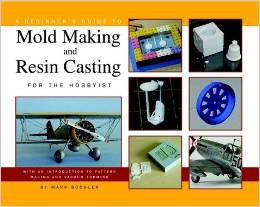
* Resin Casting - Used to make figures for your Doll House or any object you would like to cast in miniature.
Book Featured: #6. A Beginner's Guide to Mold Making and Resin Casting For the Hobbyist
Some compounds for casting include: AquaResin, Azbro Wax, Bondo, Castilene, duoMatrix, Epoxy, Foams, Forton MG, Gypsum, HydroShrink, HydroSpan, Latex, Magic-Sculpt, Magic-Smooth, Masterworks, Polyurethane, Polyester, Silicone, Vatican Stone, Winterstone.
MORE about Resin Casting
Show More Show LessResin Casting
Casting Resin may be a viable, inexpensive way to obtain original and creative dollhouse miniatures. Collectible toys, models and figures are produced using this method. Construct figures for your Doll House or any object you would like to cast in mini.
Some compounds for casting include: AquaResin, Azbro Wax, Bondo, Castilene, duoMatrix, Epoxy, Foams, Forton MG, Gypsum, HydroShrink, HydroSpan, Latex, Magic-Sculpt, Magic-Smooth, Masterworks, Polyurethane, Polyester, Silicone, Vatican Stone, Winterstone...
Begin your Casting Journey here...
Getting creative is the issue in this instance. Some of us have that creative characteristic while others of us do not. But do not despair if you feel you are of the latter. All is not lost.
We must admit that drawing and sculpting would not be a natural for us either. If you have seen our stick dogs we laughingly draw you would know what we mean. Without a pattern we sometimes feel lost. So it's great when we can follow someone else's ideas. Then add enough of us to make whatever our own.
Believe us there are ways to do things even if you do not feel you have exactly what it takes. Simply study up on the techniques necessary and try it out. You never know just what you can accomplish unless you first step out and begin.
Where to Start the Casting Process
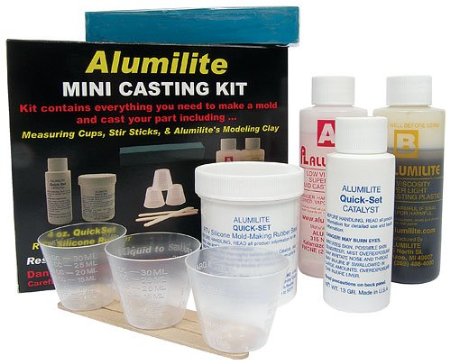
To begin the Casting Resin Process ...
We generally start in the idea realm. What do you want to create? If you already have an item or idea you wish to see come to life. Your battle is nearly won.
Take your item in hand and plan how to create a sculpture from it. One made and the rest is easy. You can begin by actually sculpting a figure you want to cast or use a figure that is ready made. Whatever method you choose the results will be the same.
Use real dolls or tiny kitchen items for example to cast a mold of. With this art form you will not have to be an accomplished artist. You can use tiny objects you possess.
Years ago we learnt this craft and it was extremely fun. We designed a bear of which we cast a mold for. Imagine a tiny bear for any dollhouse environment you create. You can do that too. For any object you currently want.
Books Help you Learn Casting Resin in Mini.
Study the Casting Resin Videos
We love YouTube. Where else can you find excellent information that anyone can follow. Thankfully we found this casting resin video for you.
Notice how they have used an already existing item to create their mold from. Just as easily you can create an object to make a mold from. Try using fimo clay or wood or whatever you desire.
So if you can make one you could easily make one hundred or more. Yes you could start your own mini factory so to speak. Being careful as always to not copy but create your own designs.
It is interesting to see how they have created their two part mold. For what we want a mold for you will need to think in the tiny scale you personally envision. Just thinking about it we can visualize making any hard to acquire part. A particular design we want but otherwise may be difficult to obtain.
So begin using your imagination and think of uses you may want to get into this mold making process for.
What is Covered in the Videos Below
- How-to make a mold using different compounds.
- Ideas of what molds best in what compound.
- Different shape suggestions to use.
- One and two part molds illustrated.
- Which material is easiest to begin with.
- How-to build a mold box from scratch and the best material to construct it with.
- Correct positioning of the item to be molded.
- How long it takes to cure a mold for a successful finish.
- Systematic steps necessary to do to build your mini molds.
- Discussion of the materials necessary for the mold making, casting resin craft.
Video #1: How-to Make a Two Part Mold
Video #2: How-to Build a Mold Box
Video #3: Introduction to Mold Making Supplies
The Many Faces of Molds
That's right, there are a few different products on the market today. As you see at the top of the page there are quite a number. However this next video demonstrates five different types that look easy enough for us to use. And with little or no fumes.
RTV (abbreviation) is used in the following video. It stands for: Room Temperature Vulcanizing and that means their products will cure at room temperature without the need of specialty ovens and such.
They do though use a latex product. We are wondering about that one. Some of us are sensitive to this material and probably will want to avoid that particular product. There are a number of alternatives available for those who may need something else.
Return to Beginning Resin Casting
Porcelain
* Porcelain - In this category you will find items like vases, dinnerware, pitchers, dolls, cups, shoes, fine china...
We are not sure exactly when miniature porcelain dolls came to be incorporated into our world. However there is a bit of information about the arrival of porcelain in regards to toys in the 19th century.
These types of children's toys were beginning to emerge somewhere between the 17th and 19th centuries. But it is surprising to find that children generally did not have toys of any sort pushed at them like they do today. At least not mass produced.
Of course wide spread design of toys really didn't seem to appear in Europe until the mid 1800s. And in America it was even slower than that.
Miniature porcelain dolls may have had their start when they began to see dollhouses as something to be treasured.
Delight and Inspire the Collector in You. Just by adding the dolls that you want to your tiny structure may get you headed in the right direction with your dollhouse miniatures environment.
Video of Artwork in Porcelain
Watch this fascinating video of intricate artwork in porcelain.
Embroidery Designs
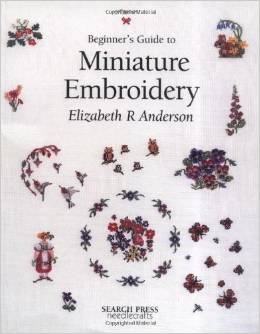
* Embroidery Designs in Miniature - "Dollhouse Miniatures are fun, and anyone can do them, according to expert miniaturist Elizabeth R Anderson. Her enthusiasm and understanding of the subject have resulted in a wonderful, easy-to-follow book....
Book Featured: #7. Beginner's Guide to Miniature Embroidery
She guides the reader through an exquisite selection of samplers, flowers, fruit, birds, butterflies, figures, animals and silhouettes in a series of clear, practical projects, which are suitable for all levels of embroiderers."
Return to Beginning Embroidery Designs
Persian Minis
Get Acquainted
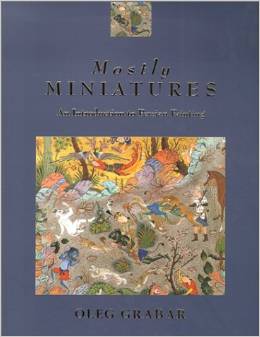
* Also worth mentioning are Persian Minis. Tiny pictures of Persian origins are awe inspiring mainly because of the attention to detail of these mini paintings. Think of replicating one of those to include in your Dollhouse Miniatures Collection!
Book Featured: #8. Mostly Miniatures: An Introduction to Persian Painting
"A Persian miniature is a small painting, whether a book illustration or a separate work of art intended to be kept in an album of such works.... The origin of the Persian miniature is difficult to trace. The art form reached its peak mainly during the Mongol and Timurid periods (13th-16th century), and was heavily influenced by Chinese paintings as the Mongol rulers of Persia brought with them numerous Chinese artists to the court." - Persian Miniature History
Not that we are aspiring to be like the ancient art forms but it is possible to obtain a professional quality with the right knowledge, skills, and tools in any form you pursue. Especially where creating your imaginative dollhouse miniatures are concerned.
Return to Beginning Persian Minis
So work on your special skills to create your world in dollhouse miniatures choosing whatever form is comfortable and rewarding for you. We are sure your success is just around the corner with your own unique, personal miniature creations.
Purchase you own tiny objects from our Toy Shoppe online! - Link
Miniatures Featured Book by Number Below ...
#1. Painting Tiny Treasures Cindi Gordon 2000-08-02 - Link
#2. Miniature Books: 4,000 Years of Tiny Treasures Anne C. Bromer 2007 - Link
#3. Making Miniature Food and Market Stalls - Link
#4. How to Cast Small Metal and Rubber Parts (2nd Edition) Paperback – February 1, 1986 - Link
#5. Creating Lifelike Figures in Polymer Clay - Link
#6. A Beginner's Guide to Mold Making and Resin Casting For the Hobbyist - Link
#7. Beginner's Guide to Miniature Embroidery Elizabeth R. Anderson - Link
#8. Mostly Miniatures: An Introduction to Persian Painting - Link
Dear Friend at the Doll House:
As an Amazon Associate we earn from qualifying purchases. So accordingly any link to Amazon opens in a new window on their site and gives us a commission if you buy. In turn it helps earn a small amount toward maintaining this site. Thank you for helping us keep doing what we enjoy.

- Home
- Mini Kinds
 Lois Williams Miniaturist
Chocolate Loves M&M's
Enjoy 15% Off Gifts With Code BLANKETShop Today to get This Deal
Ways to Keep in Touch...
Search this Site


Recent Articles


-
Let Custom Built Dollhouses become you in Mini
Oct 09, 26 03:40 PM
 Custom built dollhouses are the cream on your dollhouse world. Let someone else create and design. You sit back and reap the many rewards.
 -
Plastic Canvas Doll House sought after because of its unique qualities
Sep 29, 26 04:39 PM
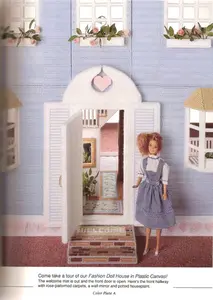 The Plastic Canvas Doll House. Seems this type of dollhouse is in demand. Who has one? The answer to that is, not many have them...
 -
Your Printable Building Plan Checklist
Sep 22, 26 08:05 PM
Your Printable Building Plan Checklist. Use and enjoy to keep yourself on track with your dollhouse craft projects.
Dollhouse Listings on Poshmark
For God so loved the world that He gave His only begotten Son, that whoever believes in Him should not perish but have everlasting life. John 3:16 (KJV)